

MODE Implant Production Technology
PURE TITANIUM · PURE WATER · PURE SURFACE
PURE TECH: Purity in Every Layer




Three Purities, One Implant
Clean from the First Step to the Last
PURE TECH is how MODE makes an implant: the titanium it starts from, the water it is machined in and the surface that meets the bone.
Raw material
0% Aluminium. 0% Vanadium.
CP Grade 4 titanium, free of aluminium and vanadium: a production approach that is controlled from the raw material of the implant onward.
- CP Grade 4
- Aluminium-free
- Vanadium-free
Production
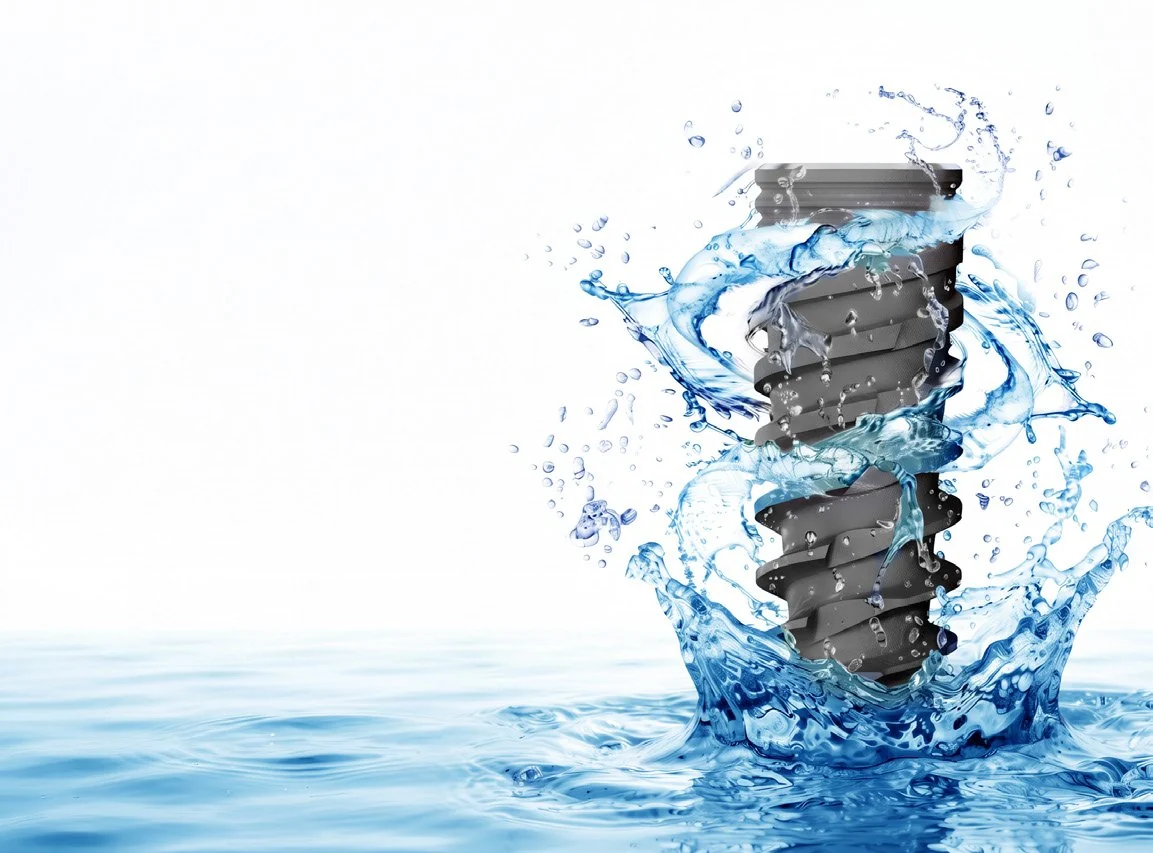
Machined in PURE WATER, Not in Oil
Pure water takes the place of industrial cutting oils in implant production, to reduce the risk of unwanted oil and chemical residue forming on the surface.
- DI pure water
- No cutting oil
- Ultrasonic cleaning in pure water
Surface
A Surface Inspired by Bone
The implant surface is prepared with calcium phosphate containing over 65% hydroxyapatite, inspired by the mineral structure of natural bone, to support the natural integration of implant and bone.
- BCP
- Over 65% HA
- Acid-free
PURE TITANIUM
0% Aluminium
0% VanadiumOnly PURE TITANIUM.
The widely used Ti-6Al-4V (Grade 5) titanium alloy contains about 6% aluminium and 4% vanadium. The CP Grade 4 that MODE Implant uses is unalloyed, commercially pure titanium.
The Quality of Your Implant Starts with Its Raw Material
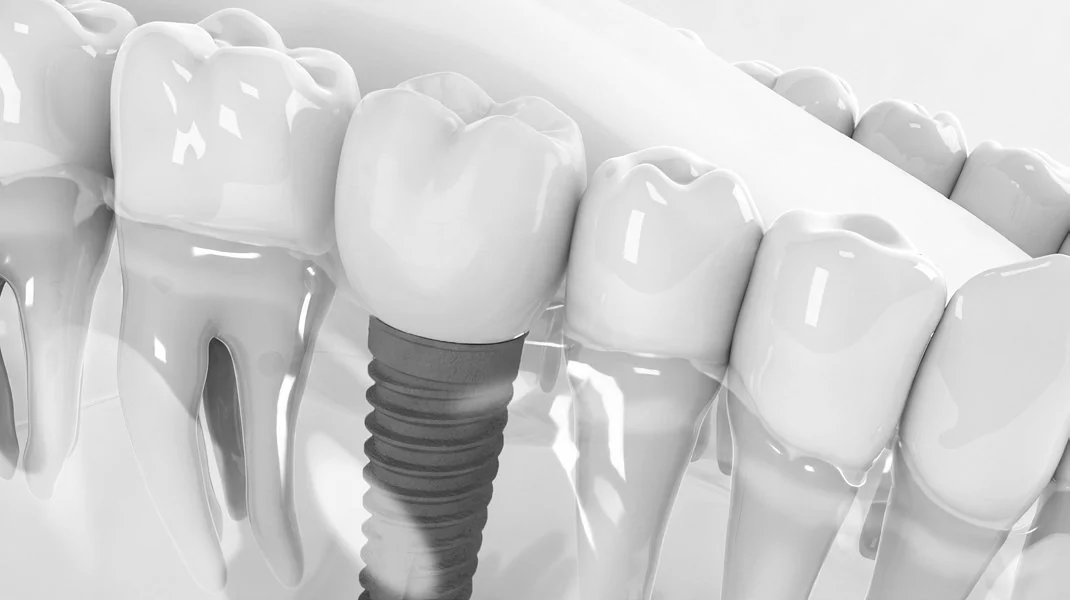
A dental implant is in direct contact with your jawbone and is meant to be used for many years, so what it is made of matters as much as its design. MODE Implant uses CP Grade 4 titanium, a grade free of aluminium and vanadium and preferred in implant production for its high biocompatibility.
- CP Grade 4
- Carpenter Dynamet · USA
- Zapp AG · Germany
- Free of aluminium and vanadium
The CP Grade 4 titanium used at MODE Implant does not contain these alloying elements.
- A highly biocompatible material
Titanium is widely preferred for dental implants because of its compatibility with the tissues of the body.
- Controlled from the very start
Titanium is supplied by Dynamet Carpenter Technology in the USA and Zapp AG in Germany, specialists in titanium products.
- What it is made of, not only its design
The implant will work with your bone for many years, so its production is controlled from the raw material onward.
PURE WATER
A Clean Surface Begins at the First Stage of Production
What the surface touches during production matters too. In conventional CNC production, industrial oils cool the cutting tools; MODE Implant uses DI pure water at this stage.
Industrial Cutting Oils
- Anaerobic bacteria formation
- Resin layer formation on implant surfaces
- Surface acid cleaning process
- Passivation of acid concentration
PURE WATER Technology
- Hygienic production
- Pure water ultrasonic cleaning
- No acid
- No acid passivation
~5%
higher cell concentration on implants machined in DI water than on implants machined in oil
~10%
higher than on implants machined in oil and sandblasted
Bacteria growth was also higher on the oil-machined and sandblasted implants than on those machined in DI water (p = 0.002). Erwin N, Sur D, Basim GB. Journal of Materials Research, 2022.
- No industrial cutting oil
Pure water cools the cutting tools while the implant is shaped, so the surface does not come into contact with oil.
- Cleanliness begins during production
The aim is a cleaner surface from the first stage of production, before any cleaning afterwards.
- Lower risk of oil residue
Industrial cutting oils can leave a film layer on the implant surface. PURE WATER is a production approach that reduces the risk of such residue.
- A scientifically studied approach
A study published in 2022 reported lower bacteria growth and higher cell concentration on titanium implant samples machined in DI water than on samples machined in oil.
PURE SURFACE
Your Bone First Meets the Implant at Its Surface
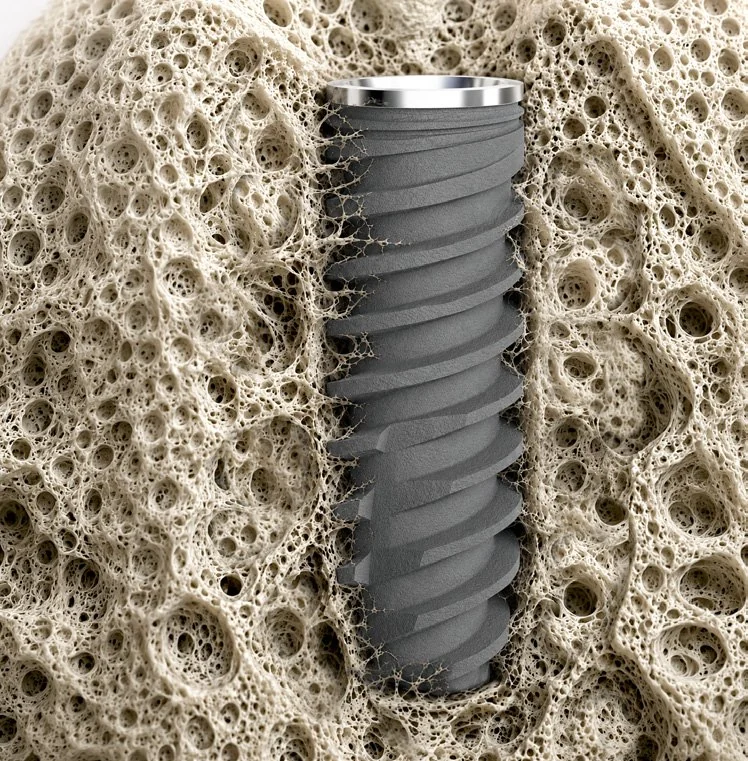
The implant surface is prepared with biphasic calcium phosphate (BCP), which has properties similar to the mineral structure of natural bone. The material contains over 65% hydroxyapatite (HA) and is applied to form a homogeneous surface.
- Hydroxyapatite (HA)
- over 65%
- β-TCP, α-TCP and TTCP phases
- under 35%
- Other Ca-P phases
- under 5%
- Inspired by natural bone mineral
Calcium phosphate and hydroxyapatite are biomaterials with properties similar to the mineral structure of natural bone.
- A structure that supports osseointegration
MODE Implant’s BCP surface was developed to support the contact between implant and bone and the osseointegration process.
- Surface treatment without acid
Because BCP is used, no acid is needed to clean the particles that remain on the surface, so the need for passivation is eliminated.
- Robotic Micro-Blast technology
A robot and cobot automation system blasts the implant surface precisely to create a homogeneous topography.

Save the Earth
What Is Pure for the Patient Is Clean for Nature
Acid Free
The surface is treated with a material consisting of over 65% hydroxyapatite, so no acid compounds are needed to clean the remaining particles.
Chemical Free
Parts machined in pure water do not have to be cleaned with chemical compounds afterwards. No industrial oil or chemicals are released into nature.
Zero Waste
With no acid and no industrial oil in production, these wastes are not released into nature: as close as possible to the zero waste target.
Low Carbon Footprint
MODE Medikal holds the C+ Energy Efficient Company Certificate for using energy resources in the most efficient way.

2017
Gold Medal, Geneva
Research and innovation award for the surface technology at the 45th International Exhibition of Inventions of Geneva.
2018
Manufacturer of the Year
Awarded from the USA for an innovative approach to its products.
2023
EU-MDR Certificate
The European regulation that sets the standards for the safety and performance of medical devices.
Frequently Asked Questions
Why is titanium used in dental implants?
Titanium is widely preferred in dental implant production because of its high biocompatibility. MODE Implant uses CP Grade 4 titanium for this purpose.
What is CP Grade 4 titanium?
CP Grade 4 is one of the grades of commercially pure titanium used in dental implant production. It is the grade MODE Implant chooses for PURE TITANIUM.
What does biocompatibility mean?
Biocompatibility means that a material can be used in harmony with the tissues of the body. CP Grade 4 titanium stands out for its high biocompatibility.
Why does it matter that there is no aluminium?
If wear or corrosion occurs on an implant surface over time, released aluminium particles can cause inflammation and cellular stress in the surrounding tissues.
Why does it matter that there is no vanadium?
Released vanadium ions can negatively affect the viability of the cells around the implant and have a toxic effect on tissues.
What is the advantage of using pure water in implant production?
Pure water keeps the implant surface from coming into contact with oil during production and reduces the risk of oil residue.
Why is oil residue on the implant surface unwanted?
Cutting oils used in CNC production can leave residue on the titanium surface. With PURE WATER, pure water replaces industrial oil to reduce this kind of production residue.
How does PURE WATER contribute to integration with bone?
PURE WATER is not a technology that guarantees osseointegration; its purpose is to protect the implant surface from oil residue. A cleaner, more controlled surface aims to be a better starting point for the biological contact between implant and bone.
Does an implant machined in pure water have a cleaner surface?
The purpose of PURE WATER is to reduce the risk of oil and production residue on the implant surface, so it focuses on protecting surface cleanliness from the very start of production.
Why is the implant surface so important?
Once the implant is placed, your bone is in direct contact with its outer surface. The structure of that surface matters for how bone cells interact with the implant and for osseointegration.
How does PURE SURFACE contribute to bone?
PURE SURFACE creates a surface based on calcium phosphate and hydroxyapatite, with properties similar to natural bone minerals. The aim is a biocompatible, controlled surface for the contact between implant and bone.
What is a BCP surface?
BCP is biphasic calcium phosphate, made up of hydroxyapatite and other calcium phosphate phases. MODE Implant applies it with micro-blast technology to give the implant surface a homogeneous topography.
Why is residue on the implant surface unwanted?
The implant surface is in direct contact with bone and the surrounding tissues, so it should be clean and controlled. PURE SURFACE focuses on reducing the risk of unwanted chemical residue after surface treatment.
This content is for general information. Your dentist determines the treatment and care plan that is right for you.
Pure from the Raw Material to the Surface
Read the catalog, see how the same care continues in the digital workflow or talk to our team.